
About WUDFLY.
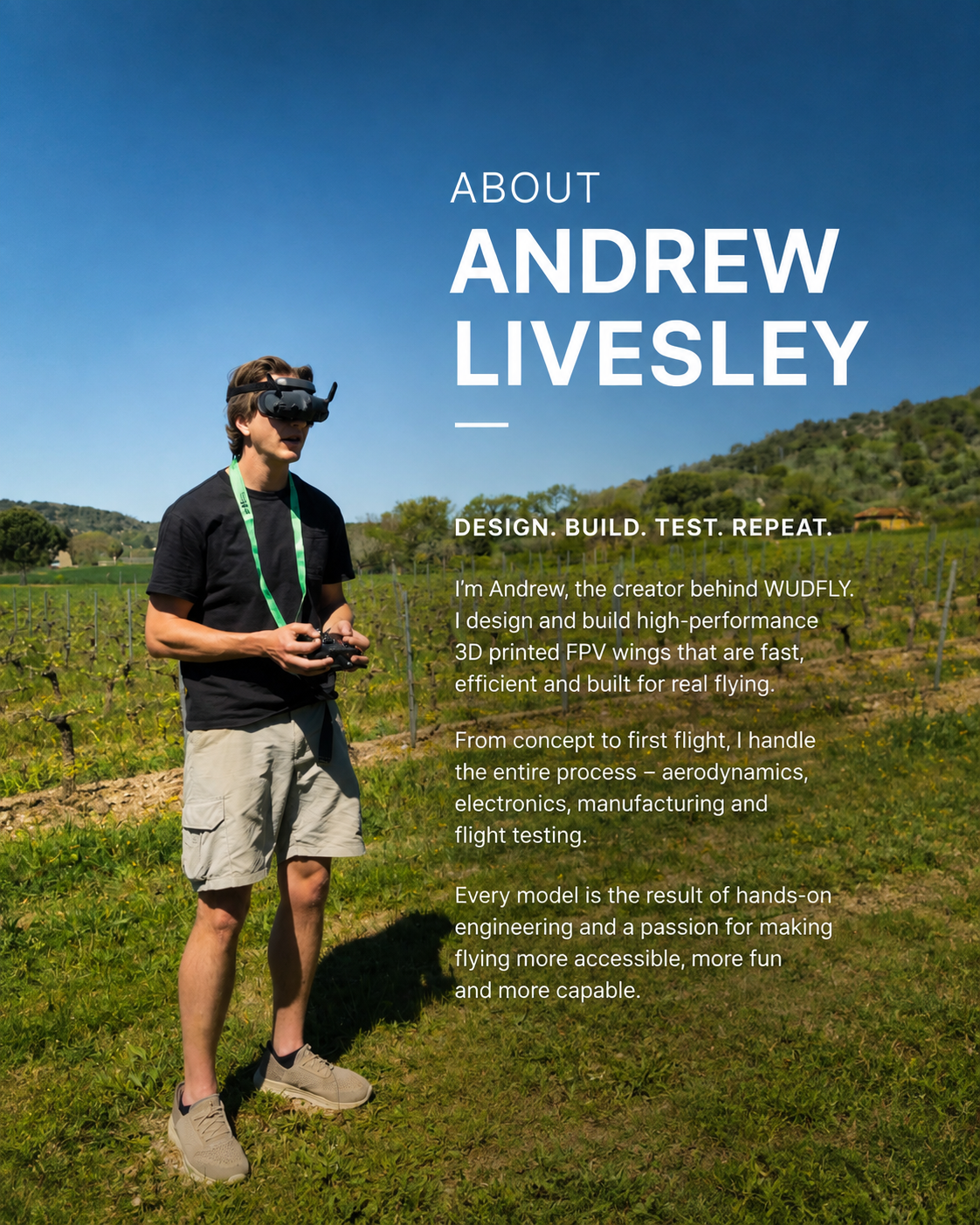
WUDFLY is a small fixed-wing aircraft development project run by Andrew Livesley. I take each aircraft from mission definition and initial sizing through aerodynamic design, CAD, printed manufacture, systems integration, INAV setup and flight testing.
The aim is to release an aircraft with known geometry, a tested equipment baseline and enough setup information that a builder can reproduce the configuration I actually fly.
Start with the requirement.
Each project starts by defining the mission and the constraints around it: target mass, speed, endurance, handling, available power, component package, manufacturing limits and the environment the aircraft is intended to fly in.
Initial sizing and balance calculations establish a viable starting point. From there I develop the planform, airfoil choice, twist, control geometry, propulsion and internal layout together—because changing one part of the aircraft changes the rest of the system.
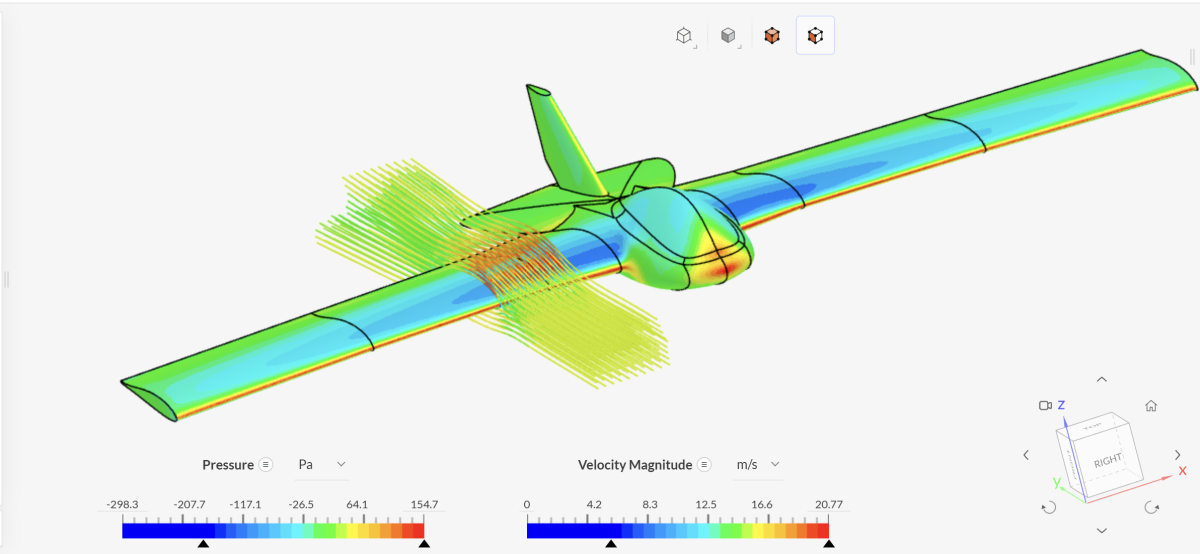
Particle traces and pressure distribution are used to inspect how the complete geometry is moving the air, highlight separated or disturbed regions, and check whether the aerodynamic package is behaving as intended.
Build, configure, test.
Once the geometry is defined, the next work is physical. I print and assemble the aircraft, package the real electronics, establish a known configuration baseline and then fly it against specific test questions. These stages are where assumptions from CAD and analysis are checked against the complete aircraft.
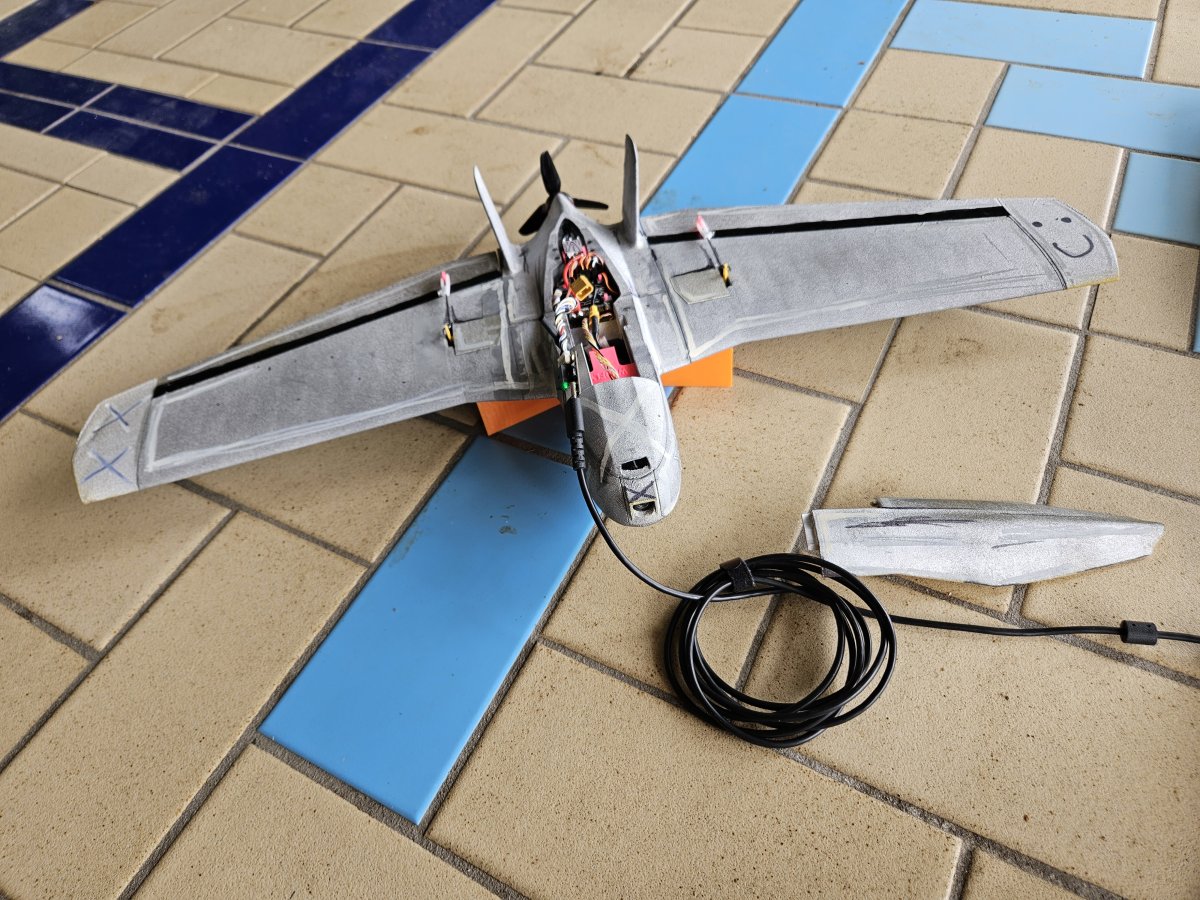
Printed masses are compared with the design budget, the actual electronics are packaged in the airframe, and wiring, cooling, stiffness, service access and assembly sequence are checked together. If the physical build exposes a weak point, the CAD changes.
Keeping releases current.
A WUDFLY aircraft purchase includes future revisions to that aircraft. When a new print process, setup improvement or hardware change is useful to an existing release, I can cycle that work back into it rather than treating launch day as the end of development.
Andrew Livesley.
I design, build and flight-test WUDFLY aircraft myself. The work spans aerodynamic design, CAD, printed structures, electronics integration, flight control and test flying, which means decisions can be made around the aircraft as a complete system rather than as isolated parts.
My current focus is small fixed-wing FPV aircraft, starting with pushing the sub-250 g category through BANDIT and then expanding into new sizes and missions. Feedback from testing and from pilots can feed directly into CAD, documentation or setup revisions.