
What is an FPV wing?
An FPV wing is a fixed-wing radio-controlled aircraft with a camera onboard that sends live video back to the pilot. Instead of watching the aircraft from the ground, you fly from the aircraft's point of view through FPV goggles or a screen.
Camera on the aircraft → live video link → goggles or display → pilot flies as if sitting inside the aircraft.
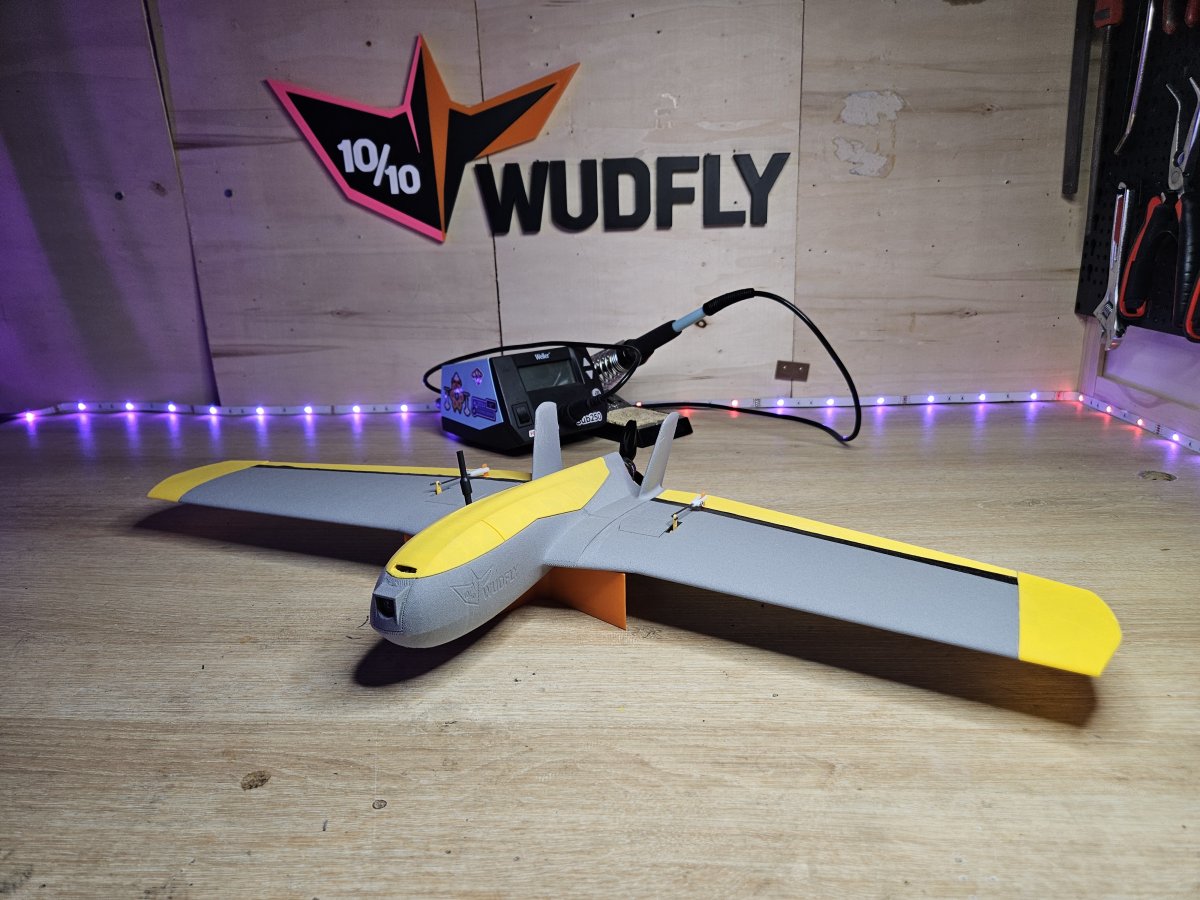
This is FPV wing flying.
The onboard camera turns the aircraft into the viewpoint. You fly the line ahead of you rather than trying to judge the aircraft's attitude from the ground. Terrain, gaps, height and speed become much more immediate.
What is actually inside an FPV wing?
A modern FPV wing is easiest to understand as a set of systems working in order. The video system lets you see, the radio system lets you command the aircraft, the flight controller coordinates it, and the motors and servos turn those commands into movement.
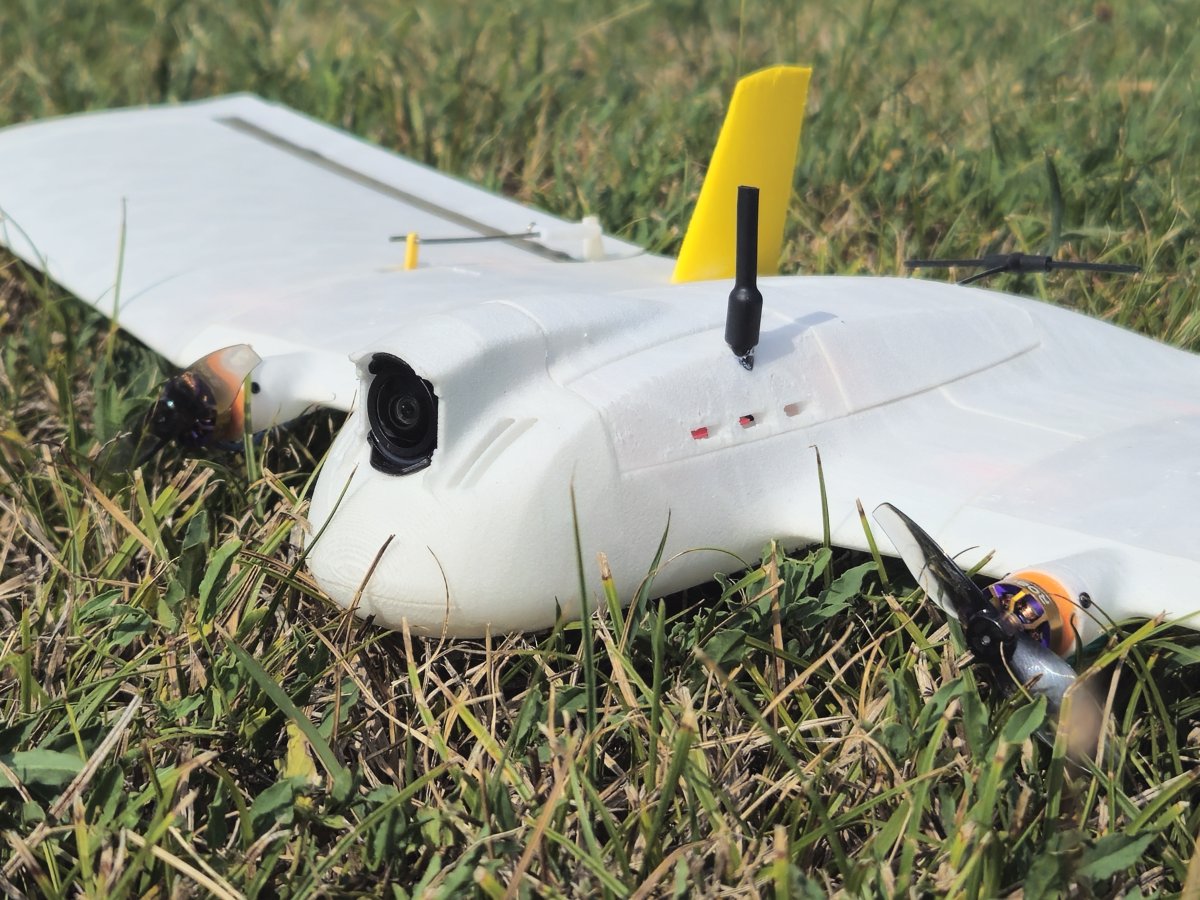
The camera creates the onboard view. The VTX — video transmitter — sends that picture back to the pilot. In an analogue system the camera feeds an analogue video transmitter. In a digital system, such as DJI O4, the camera and digital VTX work together to encode and transmit the image.
The flight controller is the aircraft's central coordinator. It reads pilot commands and onboard sensors, then drives the control outputs. On a modern FPV wing it can also provide stabilised flight modes, launch assistance, OSD information and navigation functions.
The receiver listens to the pilot's radio transmitter and passes stick commands and switch positions to the flight controller. SPECTRE's current layout is designed around compact ELRS receivers such as the RadioMaster RP1/RP2 class.
The ESC controls motor power. A single-motor wing has one motor output; twin-motor aircraft such as SPECTRE use separate motor channels so the flight controller can command each motor independently.
Servos physically move the control surfaces. On a flying wing these are normally elevons: each surface combines elevator and aileron functions, controlling pitch and roll.
The battery supplies the energy for propulsion and onboard electronics. The exact power path varies by aircraft, so voltage regulation and wiring need to match the components actually installed.
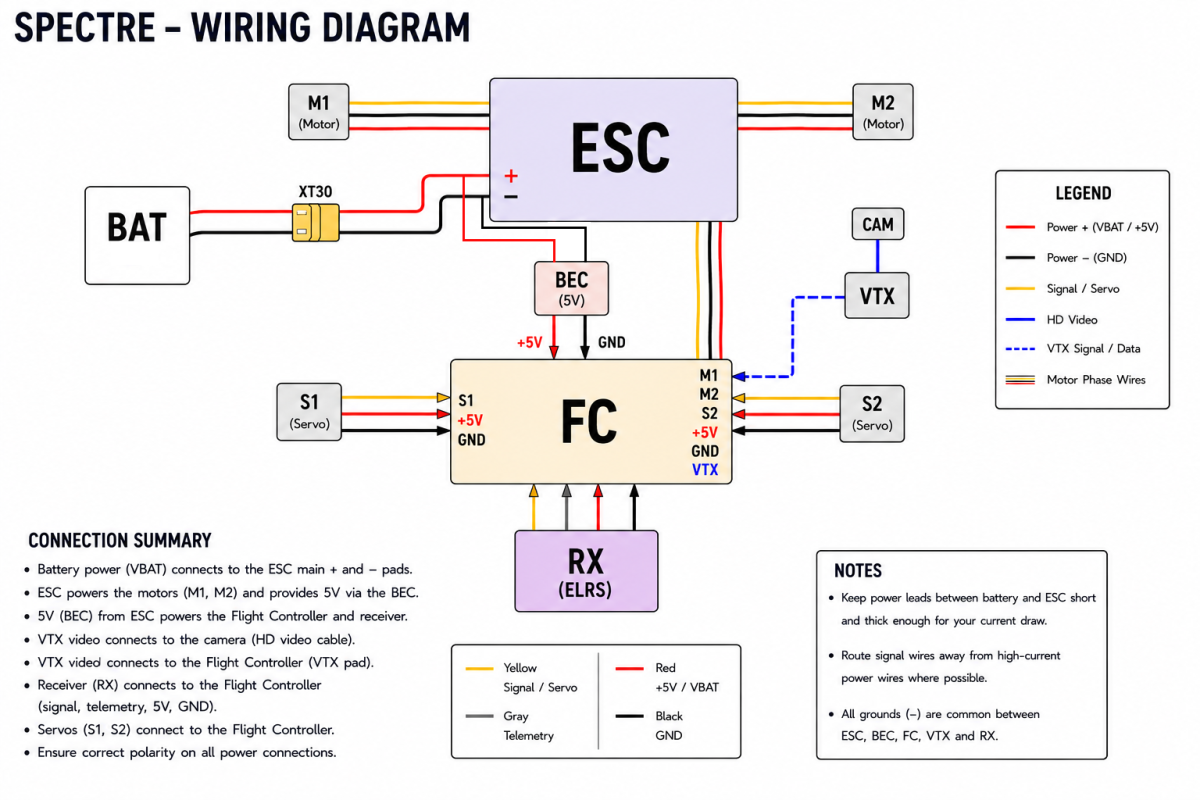
A real example of how the major systems come together in an FPV wing. Exact ports, voltage rails and connections vary with the electronics used, so this is an example from SPECTRE rather than a universal wiring standard.
FPV wing or FPV drone?
Both can use the same basic FPV idea, but they move through the air very differently.
FPV wing
- Lift: generated aerodynamically by the wing.
- Flight: naturally suited to continuous forward motion, carving lines and covering ground.
- Efficiency: generally efficient in forward flight and able to glide with little or no motor power.
- Launch: commonly hand-launched.
- Hover: normally no.
FPV multirotor
- Lift: produced directly by the propellers.
- Flight: can stop, hover, reverse and move vertically.
- Efficiency: the motors continuously provide the lift needed to stay airborne.
- Launch: usually takes off vertically.
- Hover: yes.
Why people like FPV wings.
Speed, energy, glide and terrain become part of how you choose the line.
A fixed wing creates lift aerodynamically, making forward flight fundamentally different from hovering.
The category ranges from relaxed cruising aircraft to compact fast proximity wings.
Flying wings can package propulsion, controls and FPV equipment into relatively simple aircraft.
Compact wings are easy to carry to suitable open flying sites.
For many pilots the build, setup and development are part of the hobby too.
Are FPV wings difficult to fly?
They can be, but the answer depends heavily on the aircraft and setup. A fast, highly loaded wing and a stable lightweight aircraft can both be FPV wings while feeling completely different.
Wing loading, planform, twist, controls and propulsion all affect the flying character.
INAV and similar systems can provide stabilised modes, launch assistance and onboard information when correctly configured.
CG, control direction, control travel, motor direction and failsafe need to be correct before launch.
Two different kinds of FPV wing.
FPV wing does not describe one flying style. BANDIT and SPECTRE apply the same basic idea to very different experiences.
BANDIT
A compact sub-250 g FPV wing focused on speed, low-level lines, proximity and aerobatics. The tested setup has recorded 198 km/h and 20+ minute efficient-flight endurance.
View BANDIT →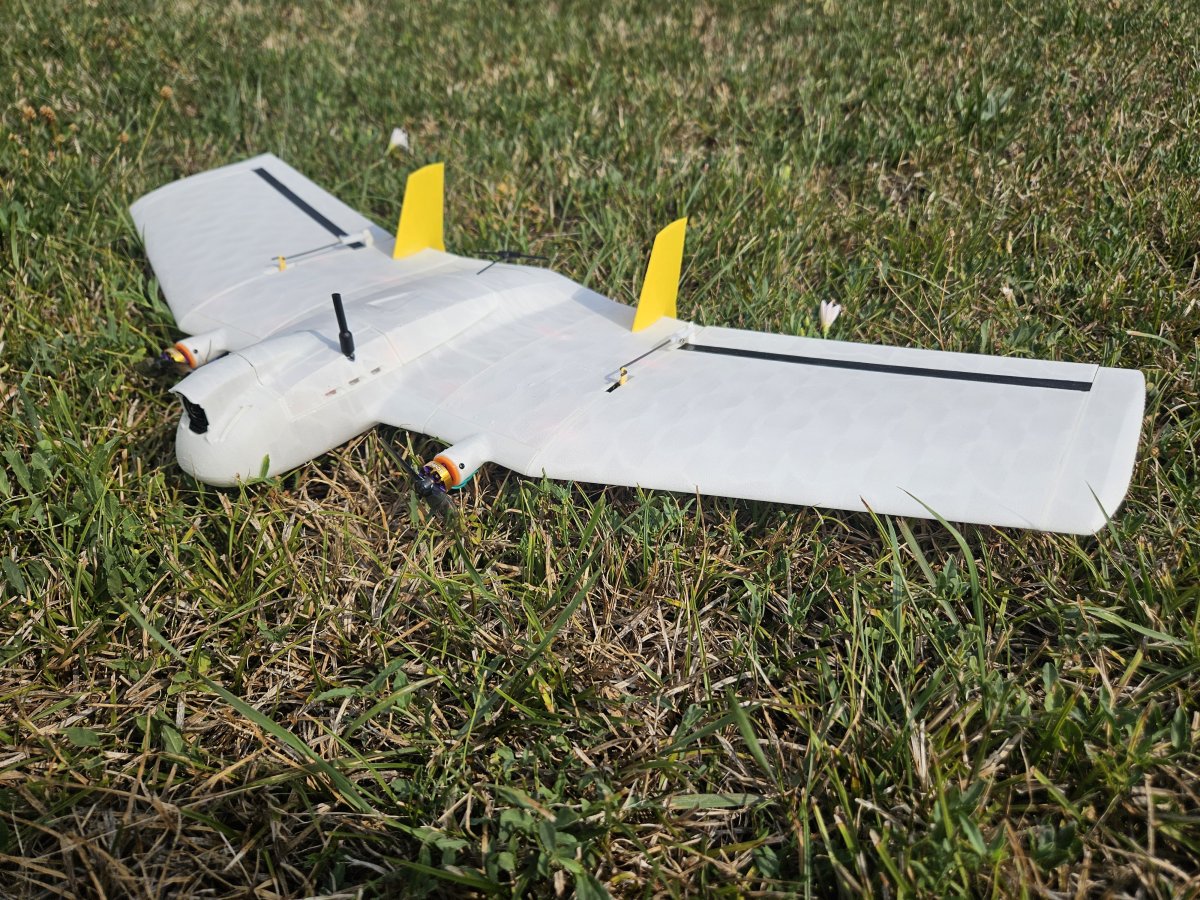
SPECTRE
A compact twin-motor FPV aircraft designed around a much more approachable stable mode while retaining an Acro side for proximity, gaps and low-level flying.
View SPECTRE →FPV wing FAQ.
What does FPV mean?
FPV means First Person View. A camera on the aircraft sends live video back to the pilot, normally to FPV goggles or a display.
Can an FPV wing hover?
A conventional fixed-wing aircraft normally cannot hover. It needs airflow over the wing to create aerodynamic lift.
Is an FPV wing the same as an FPV drone?
Both can use onboard video, but a wing creates lift aerodynamically while a multirotor creates lift directly with its propellers.
Do you need a flight controller?
Not necessarily, but many modern FPV wings use one for stabilisation, launch assistance, OSD, failsafe and navigation features.
How long can an FPV wing fly?
There is no single answer. Aircraft mass, wing loading, battery, propulsion, speed and flying style all matter.
Can you 3D print an FPV wing?
Yes. WUDFLY aircraft use lightweight FDM-printed structures with stronger materials in aircraft-specific areas where required.
Where to go next.
Start with the Hangar.
See how WUDFLY applies fixed-wing FPV to different missions, from BANDIT's fast sub-250 g proximity flying to SPECTRE's more approachable stable FPV setup.