
Design the wing.
Then print it.
The greatest advantage of 3D printing RC aircraft isn't that plastic is inexpensive. It's the freedom to manufacture the exact wing you designed — with the airfoil, twist, spanwise loading and internal structure built in.
Repeat that geometry on another print, assemble a modular aircraft, and replace individual components when they get damaged. No wing moulds. No waiting for spare airframe stock.
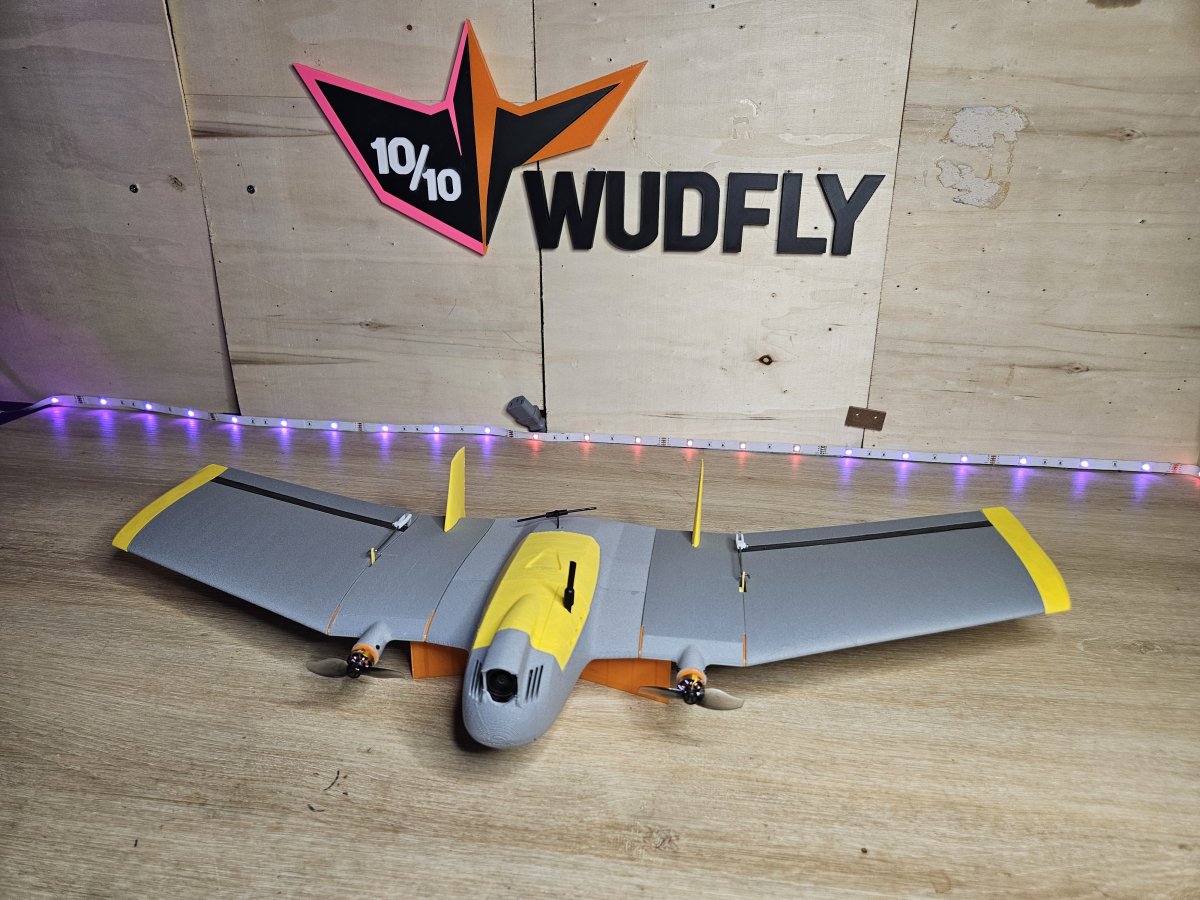
The geometry is the feature.
The wing does not need to follow a constant airfoil or a simple linear twist. With additive manufacturing, the external aerodynamic surface is defined by CAD — including local chord, incidence, sweep, washout and the gradual transition between sections.
Those choices influence the spanwise lift distribution, stall progression, handling and control response. In a conventional moulded or foam-cut wing, a complicated shape can demand extra tooling and assembly effort. For a printed wing, much of that complexity is expressed in the design file rather than the manufacturing setup.
Complex wings. Simpler manufacturing.
The research behind bell-shaped lift distributions demonstrates why spanwise twist can be an important design variable — and why realising that shape has historically presented challenges. NASA's Prandtl-D work under Albion (Al) Bowers helped establish the aerodynamic potential of carefully shaped wings.
3D printing does not automatically create a Prandtl-D wing or guarantee a lower-drag spanload. What it does is remove much of the tooling penalty for producing a complicated geometry at RC scale: each section can be printed with its designed local incidence and fitted into the complete structure.
On WUDFLY, that freedom is useful whether the goal is progressive washout on SPECTRE or studying bell-shaped loading and proverse yaw on VENOM.
“the creation of aircraft using the Prandtl bell spanload will require considerable new techniques.”
“manufacture the more complicated geometry”
The hundredth wing can match the first.
A complicated wing only makes sense if its geometry can actually be reproduced. The printable file preserves the design in a form a calibrated printer can repeat.
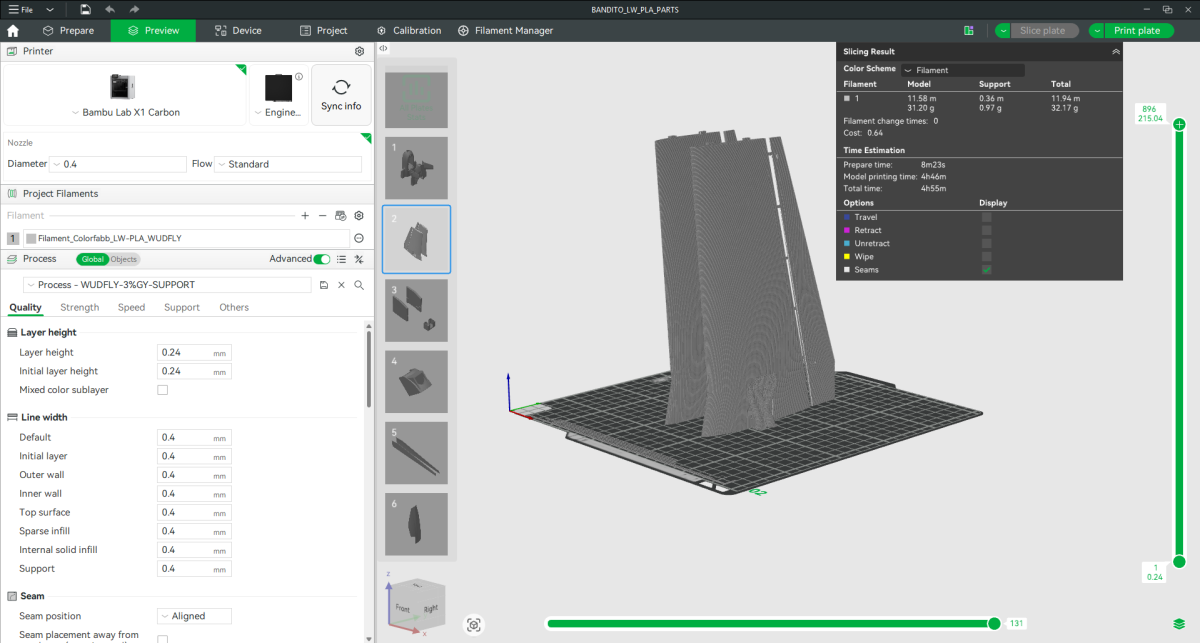
One digital reference.
CAD defines every section. Aircraft-specific 3MF/STL files and slicer guidance transfer the intended geometry, print orientation and local reinforcement into a build. A profile can be shared; the finished weight and part fit still need checking.
Explore WUDFLY print profiles ↗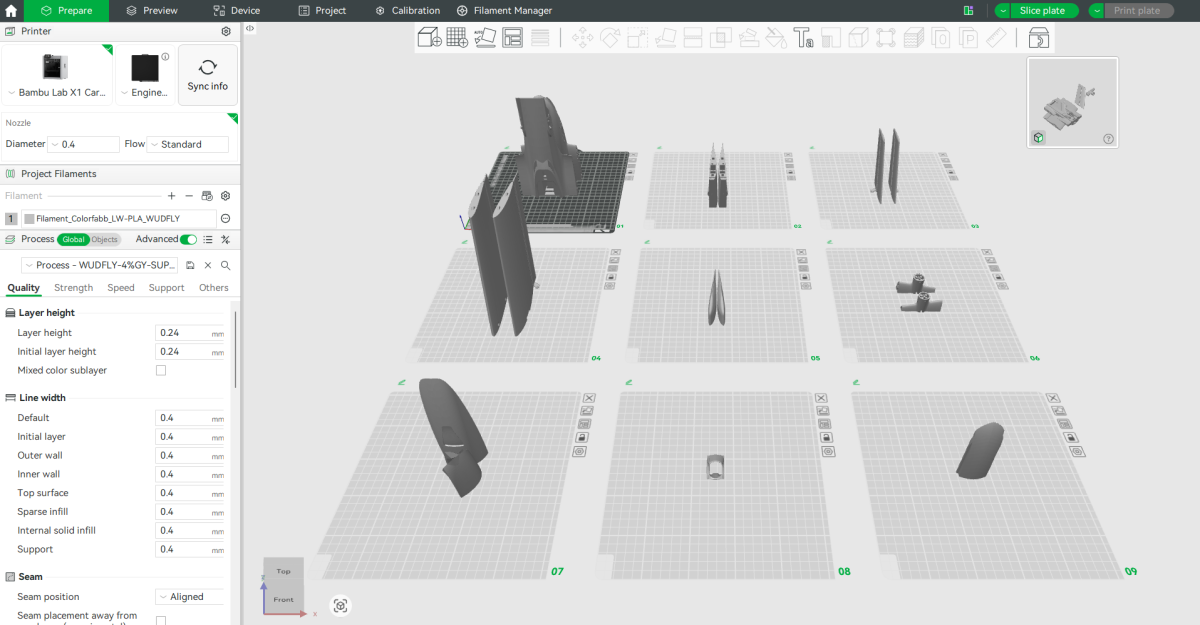
Complexity becomes parts.
Ribs, internal reinforcement, servo locations, wire channels and mating features can be printed into the part geometry. Assembly starts with purpose-made components that are designed to fit together, rather than a block of foam that needs to be carved and adapted.
See the VENOM build guide ↗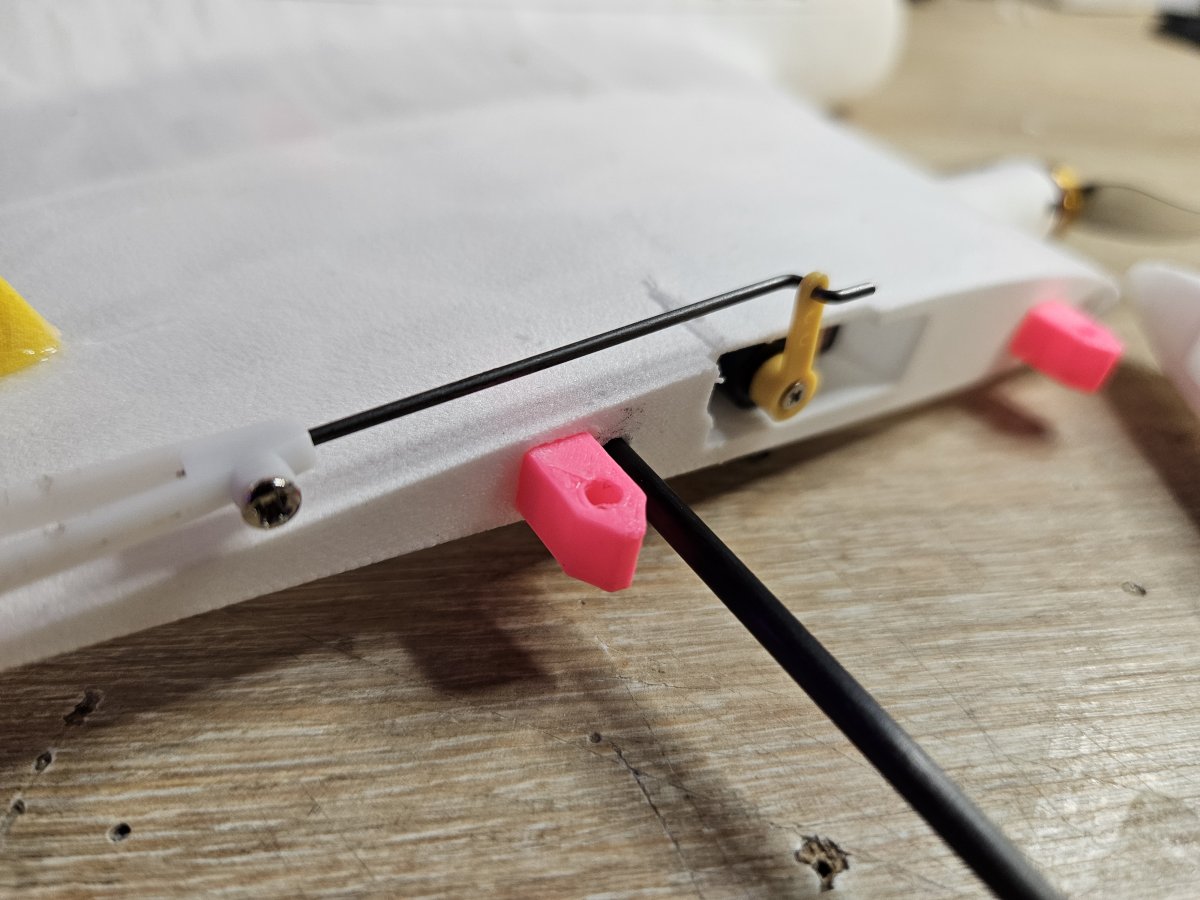
Built to come apart.
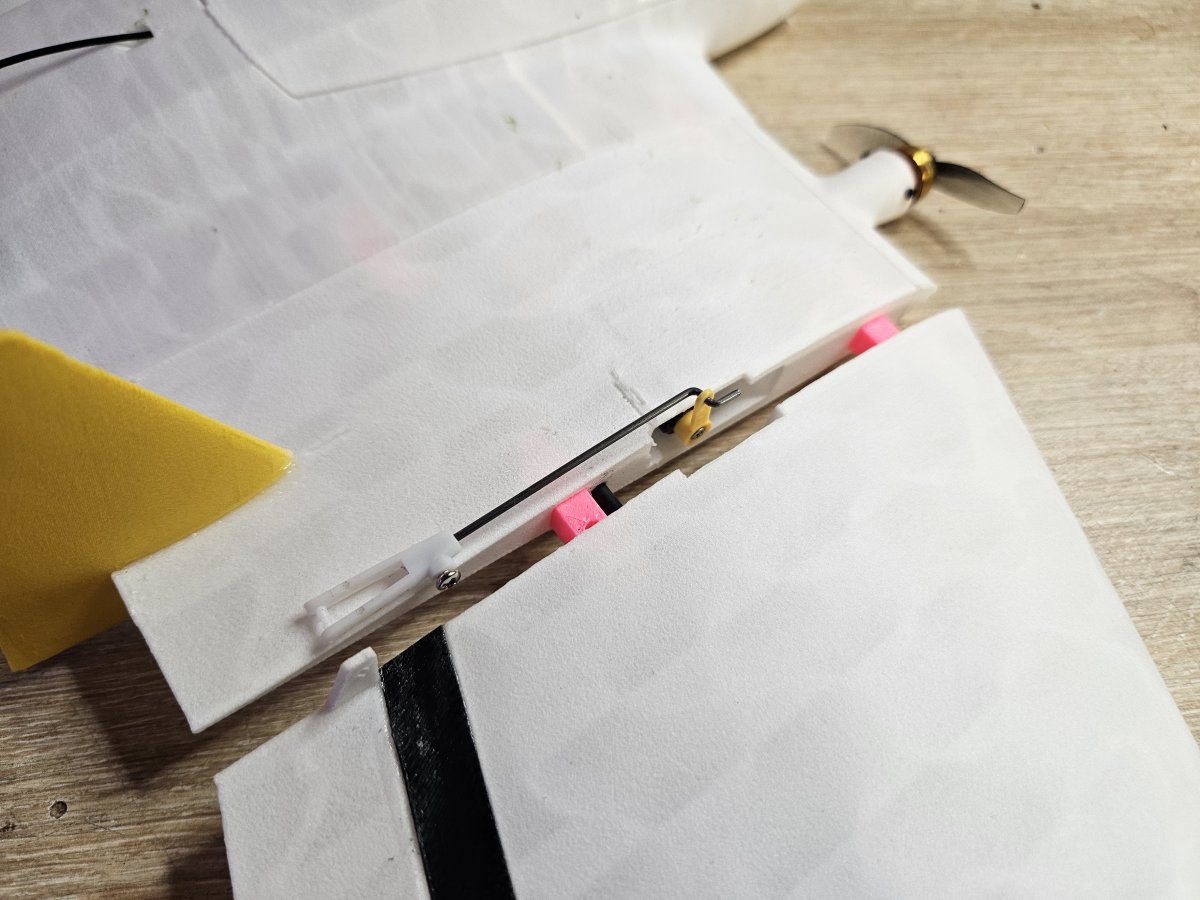
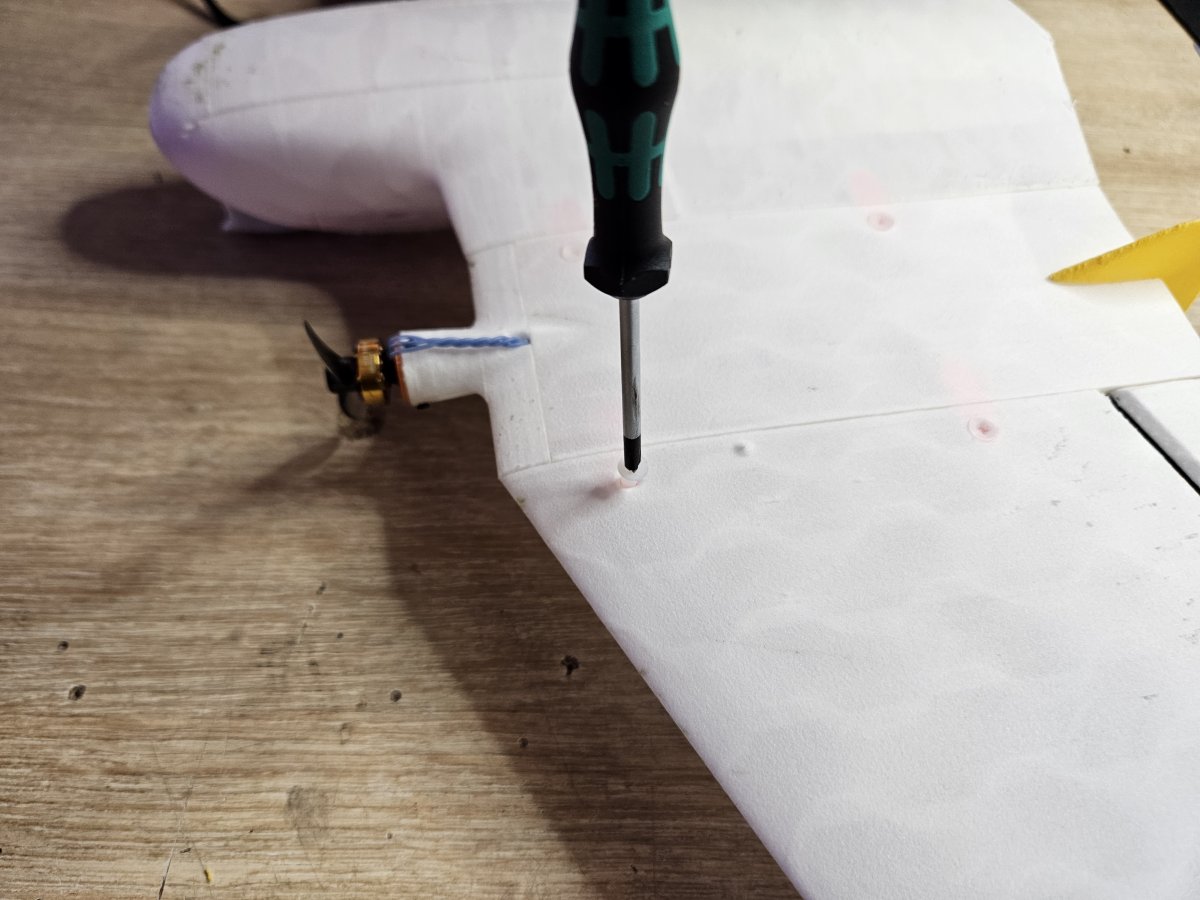
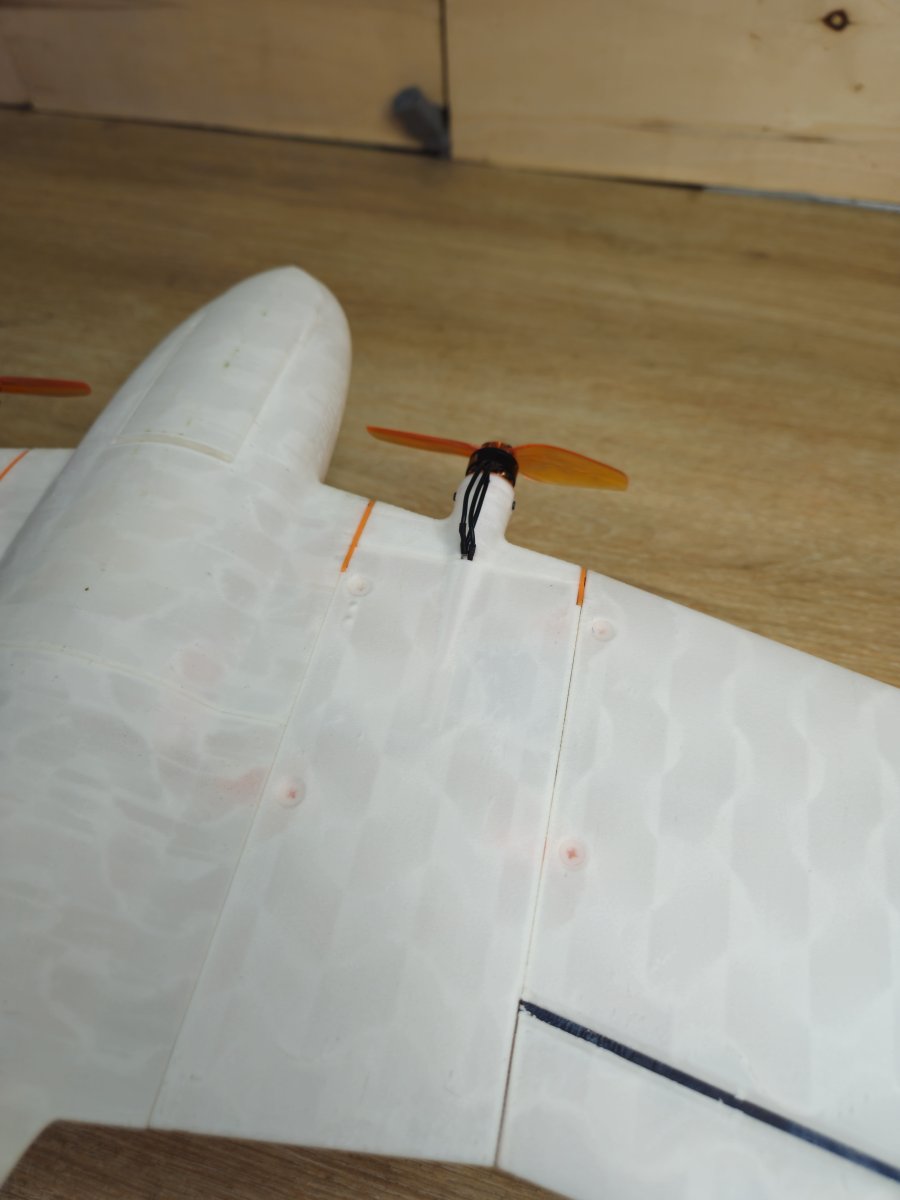
A printed airframe doesn't need to be one permanent assembly. SPECTRE and VENOM use removable wing sections, carbon reinforcement and purpose-designed attachment components so the structure can be dismantled without destroying the joints.
On SPECTRE, WingLoc tabs locate around the carbon rod and the panels fasten with nylon M3 hardware. VENOM uses its own wing attachment arrangement documented in its build guide. The principle is the same: controlled alignment, predictable assembly and individual sections you can remove for maintenance.
Build stiffness where it matters.
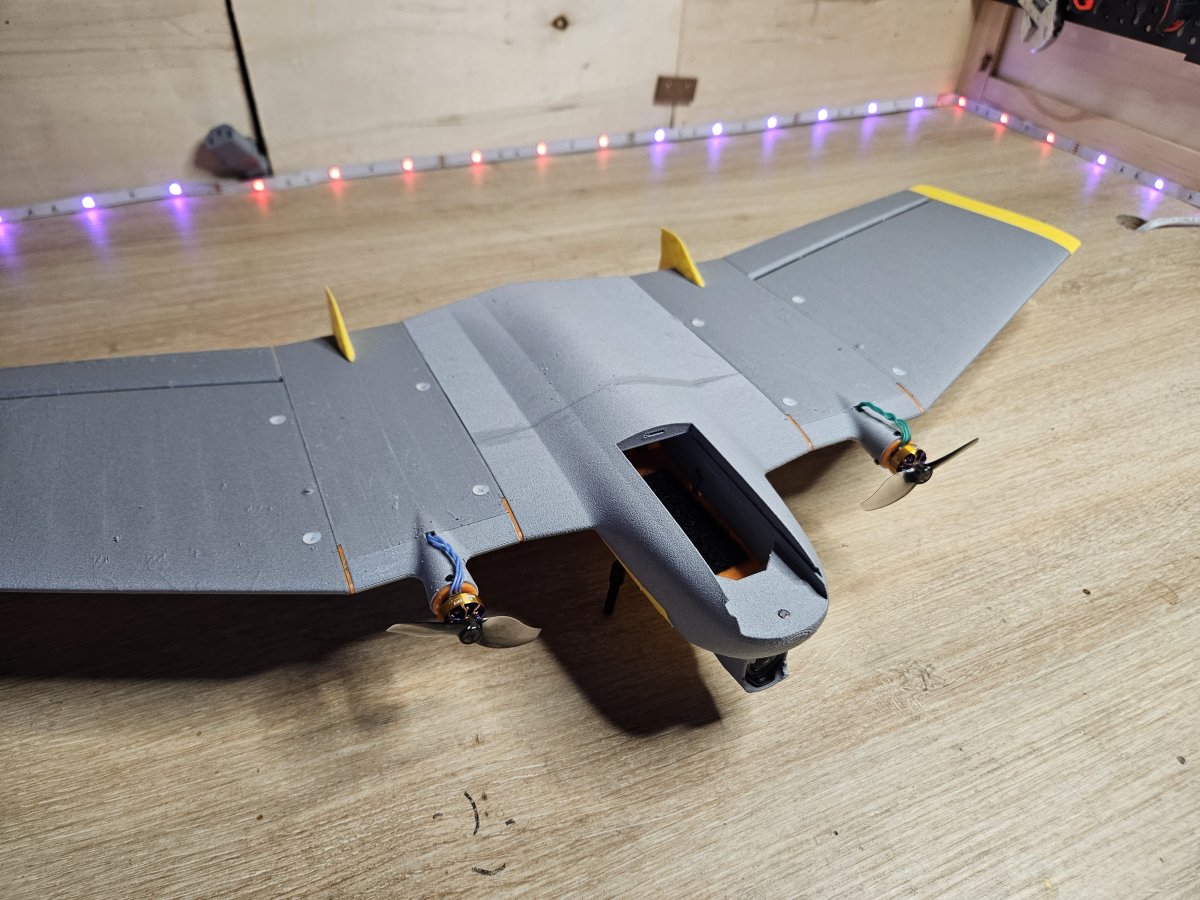
A wing is also a loaded structure. Its rigidity determines how faithfully it holds the shape that was designed into it under aerodynamic and control loads.
Resist unwanted twist.
At higher speeds, bending and torsional deformation can change local incidence, control response and effective aerodynamic loading. Printed skins, internal webs and appropriately sized spars can be designed to resist those changes while keeping mass under control. This is an opportunity for structural optimisation — not a guarantee that every printed wing is rigid.
Reinforce only where needed.
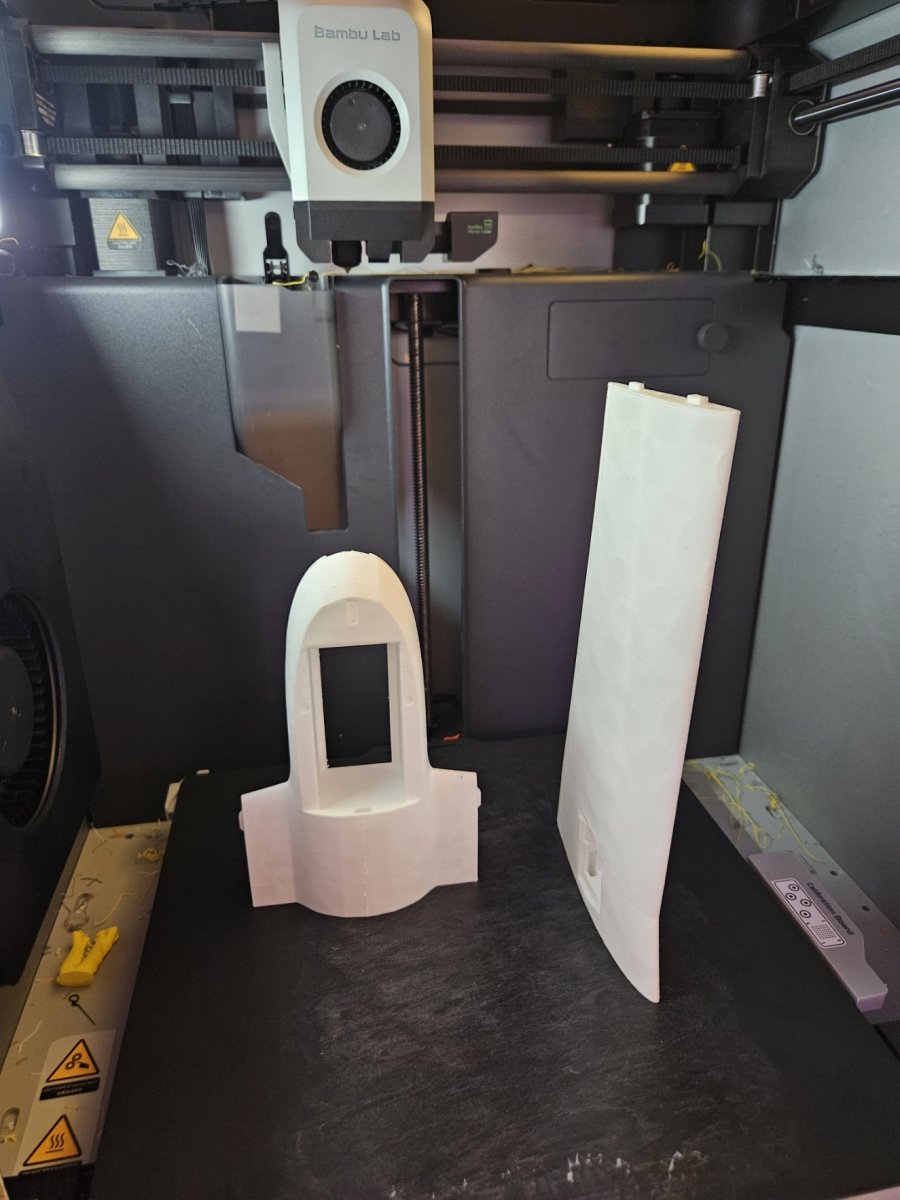
Thin LW-PLA shells can be combined with carefully placed infill, stronger PETG interfaces and carbon reinforcement. Compared with some unreinforced EPP or EPO constructions, a well-designed printed assembly can achieve greater geometric stiffness. But EPP in particular is excellent at absorbing impacts and springing back; printed PLA can crack rather than rebound.
Stiffness, ultimate strength and crash toughness are different properties. Comparative performance depends on structure, mass, orientation, adhesion, reinforcement and loading; WUDFLY does not claim a universal strength advantage over foam. Academic studies of printed wing ribs and aeroelastic response reinforce the importance of torsional performance and validation. Research example ↗
A roll of filament. Many airframes.
Once the model is developed, the material needed to manufacture its replacement structure is remarkably small — and it is local to the builder.
Actual consumption depends on the print profile, supports, failed prints and revision of the airframe.
Not another foam aircraft in a box.
A 750 g roll contains enough LW-PLA for about ten theoretical 74 g BANDIT shells. At an illustrative €30 per 750 g spool, that's approximately €3 of LW-PLA per shell before the other materials, hardware, labour and printing overhead. SPECTRE and VENOM use somewhat more printed material, but still in the lightweight-aircraft category.
For repeated repairs, the printed structure can cost a small fraction of purchasing complete replacement foam airframes. This is a material-cost comparison, not a like-for-like retail price comparison: foam models may include parts, tooling, accessories and manufacturer margin that filament cost alone does not.
Printing isn't the shortcut. It's the tool.
A beautifully printed wing can still be a poor aircraft. Aerodynamic analysis, correct CG, material calibration, joint strength, layer bonding, cooling, servo loads and real flight tests remain essential. The benefit is that a good design can be manufactured again, including features that would otherwise demand significantly more tooling or handwork. Foamed LW-PLA is light, but it is also less crash-tolerant than many flexible foam materials: build carefully, inspect after impacts, and repair or replace damaged components.
Three aircraft. Three reasons to print.
The same manufacturing approach supports very different aerodynamic objectives, from high-speed proximity flying to precise, highly twisted wings and modular V-tail configurations.
BANDIT
Fast, compact FPV performance with a light printed structure you can reproduce after a hard landing or a crash.
Explore BANDIT ↗SPECTRE
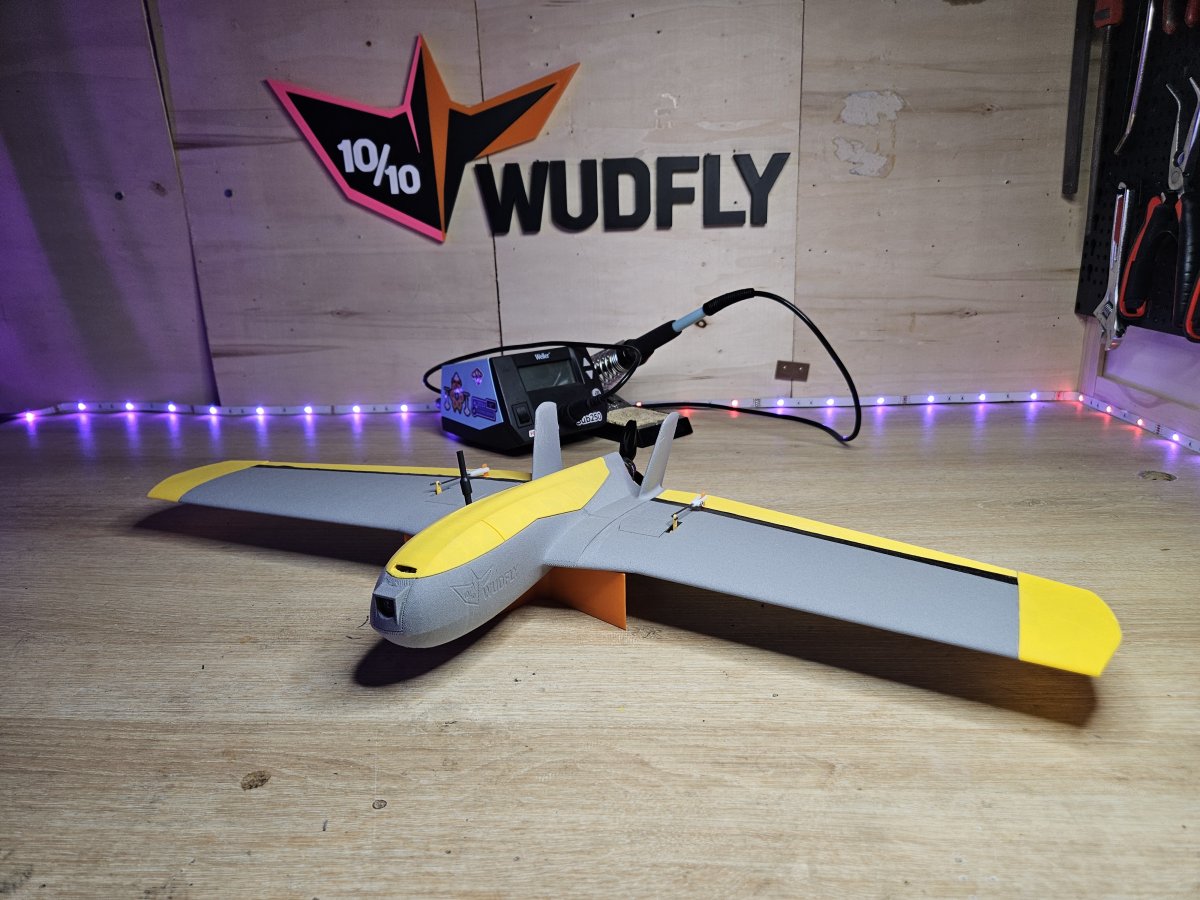
Progressive geometric washout, carefully located propeller slipstreams and removable WingLoc-equipped wing modules.
Explore SPECTRE ↗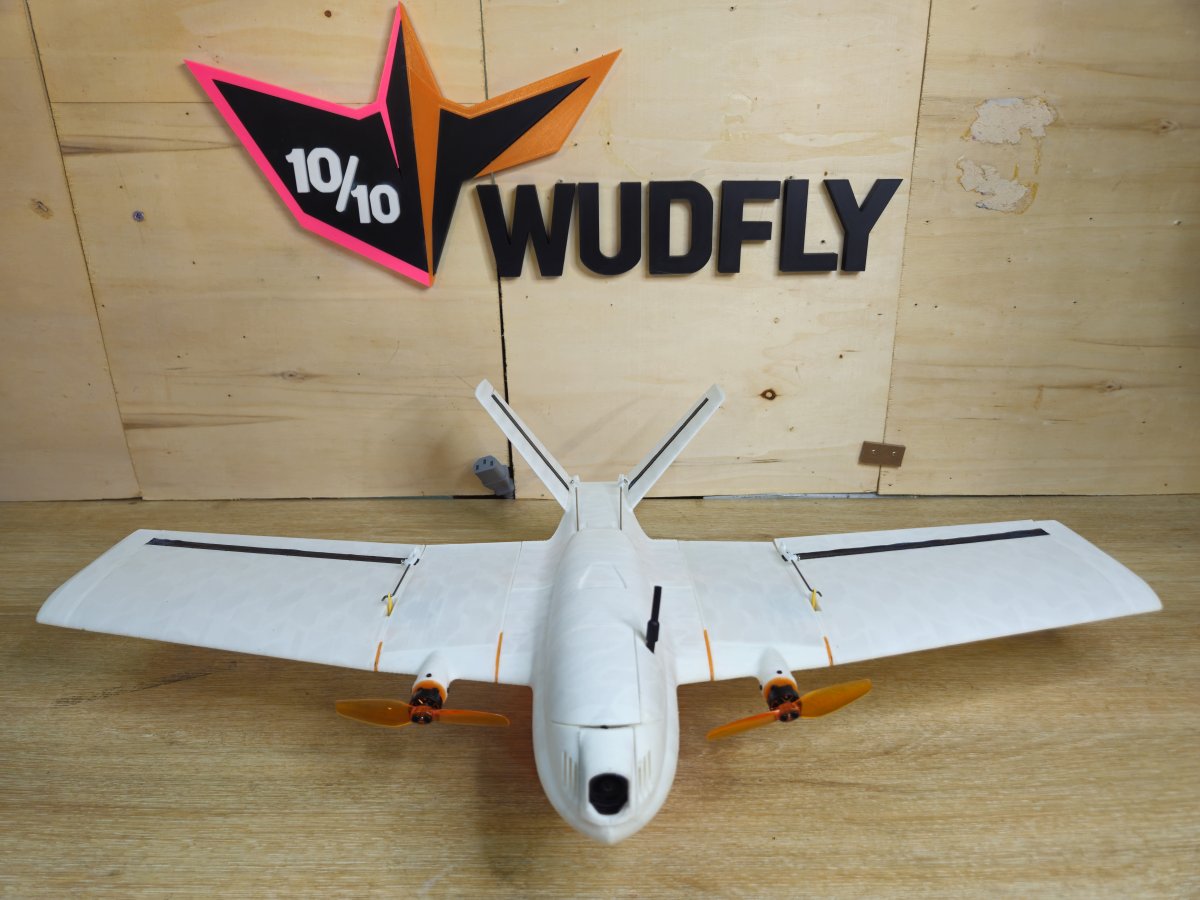
VENOM
A closely coupled V-tail blended wing body, developed through simulation and flight testing with spanload shaping and modular construction.
Explore VENOM ↗Before you print.
Aircraft-specific print settings and reference weights are supplied with the corresponding WUDFLY project.
Does 3D printing automatically improve aerodynamic efficiency?
No. It allows accurate manufacturing of challenging geometry, but the aerodynamic choices must still be designed, analysed and flight-tested. A bell-shaped spanload does not automatically mean lower drag for every wing and operating condition.
Are printed wings stronger than EPP or EPO foam?
A stiffened, reinforced printed wing may have greater torsional or bending rigidity than a particular foam wing, but that is design-dependent. EPP generally has better impact resilience; 3D-printed LW-PLA can be brittle and may crack. Structural stiffness is not the same as crash toughness.
Are the wings removable?
SPECTRE and VENOM have modular/removable wing sections. Other aircraft use their own construction systems, including permanent joints where appropriate.
How much filament does an aircraft use?
BANDIT uses about 74 g of filament for its lightweight airframe. Other aircraft vary with size, design, print settings and additional PETG or TPU hardware. These figures exclude electronics and many assembly materials.
Do I need a special 3D printer?
No. A suitable modern FDM printer with reliable extrusion and correctly calibrated LW-PLA can reproduce these parts. Check build-volume requirements and the aircraft-specific profiles first.
Research & technical references
- NASA Armstrong, Albion H. Bowers et al. (2021), Experimental Flight Validation of the Prandtl 1933 Bell Spanload ↗. Source of the first quoted passage and discussion of aerodynamic inverse design.
- Aerodynamic Modeling of a Flying Wing Featuring Ludwig Prandtl’s Bell Spanload ↗, Aerospace (2023). Source of the short manufacturing-complexity quotation; also explains the role of twist, spanload and design conditions.
- Dogea, Yan and Millar (2023), Testing and evaluation of the structural performance of a 3D-printed polylactic acid aircraft wing rib ↗. Background on stiffness, bending and torsional response.
- WUDFLY practical references: SPECTRE engineering / WingLoc ↗, VENOM illustrated assembly guide ↗, print profiles ↗.